Self-discipline
A steady inner life encourages clarity, reliability and strength of character, especially when circumstances are difficult.
 Bharat Sevashram SanghaGurugram Branch
BHARAT SEVASHRAM SANGHA
A disciplined spiritual life directed toward truth, social unity, self-reliance and the practical welfare of others.
ATMANO MOKSHARTHAM JAGAT HITAYA CHA
The Sangha’s stated outlook joins the search for spiritual development with responsibility toward the world. The ideal often expressed as ‘Atmano Mokshartham Jagat Hitaya Cha’—for one’s own liberation and for the welfare of the world—connects contemplation with compassionate action.
For its founder, moral strength, renunciation and self-control were not ends to be kept apart from society. Their purpose included forming people who could face hardship without losing integrity, work cooperatively and respond to human needs without expectation of personal reward.
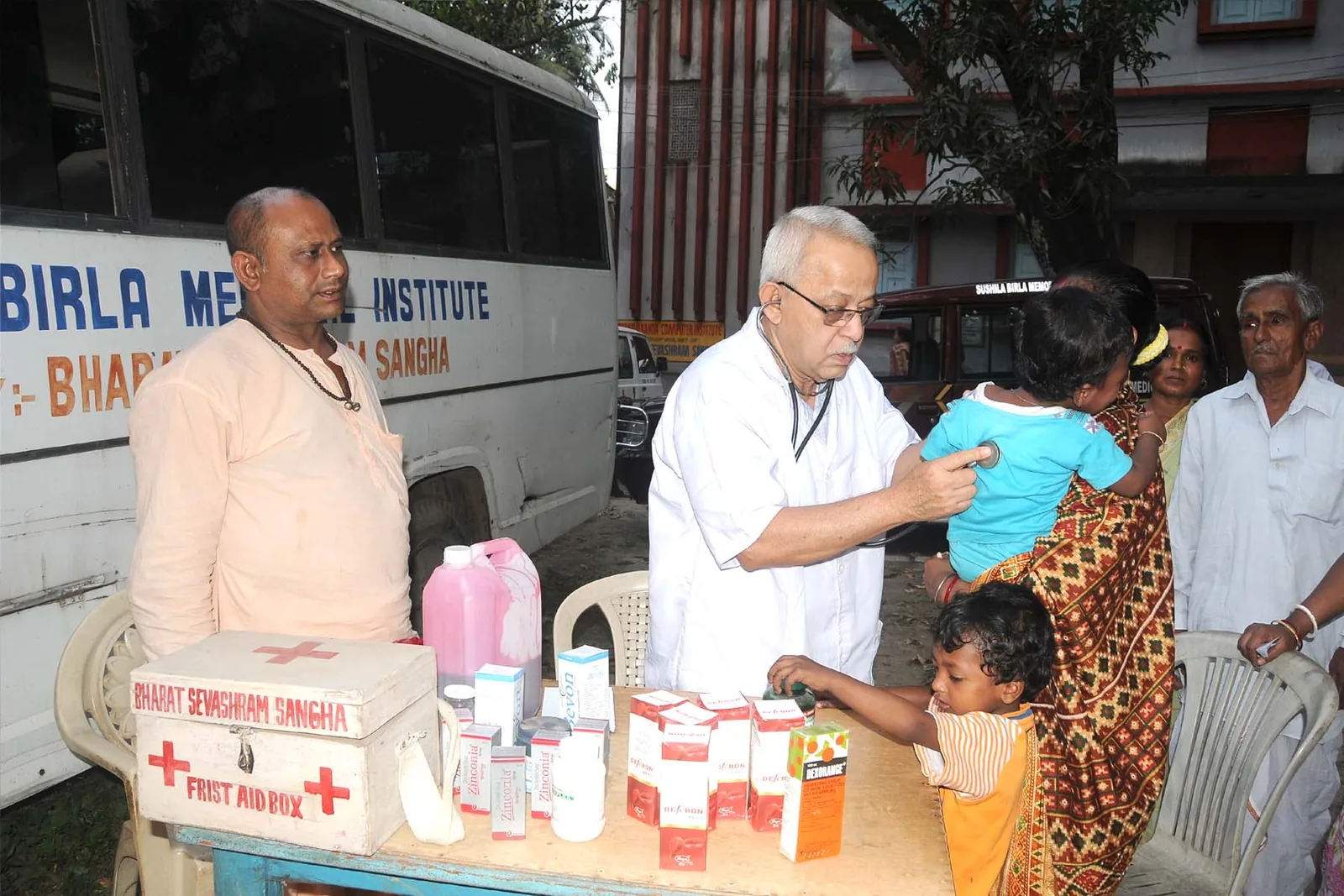
This idea gives a common shape to activities that otherwise appear very different. Education encourages capability. Healthcare protects dignity. Relief eases immediate suffering. Vocational work supports independence. All are informed by a conviction that service must have both compassion and practical effectiveness. A clinic needs medicines, trained staff and regular attendance. A school needs teachers and continuity. A disaster camp needs supplies, local coordination and trust. The Sangha’s ideal becomes tangible when moral intention is accompanied by the discipline needed to sustain such work.
PRINCIPLES IN ACTION
Ideas that connect the monastic discipline of the Sangha with its public responsibilities.
A steady inner life encourages clarity, reliability and strength of character, especially when circumstances are difficult.
Moral courage and honesty guide decisions, relationships and the use of resources entrusted for service.
Freedom from narrow self-interest creates space for duties to family, society and people in distress.
Concern becomes meaningful through food, shelter, care, education and the patient work of rehabilitation.
NATIONAL AND SOCIAL UNITY
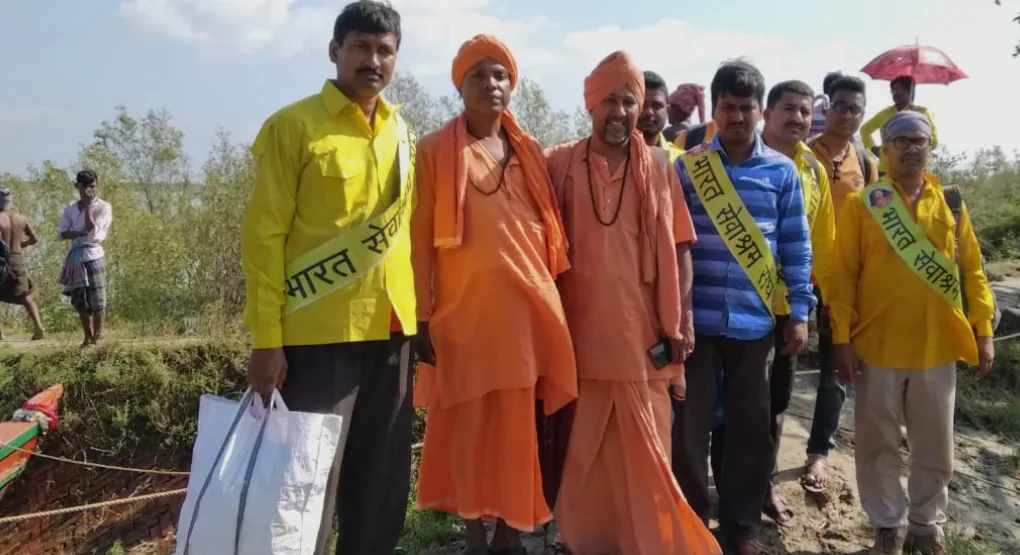
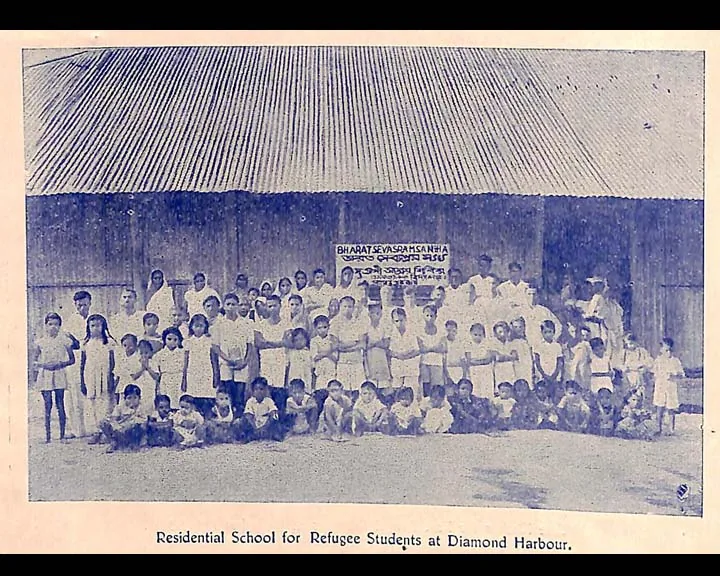
Swami Pranavanandaji Maharaj placed importance on unity and cooperation among communities. The Sangha’s Milan Mandir movement developed as a means of fostering cultural participation, religious practice and social responsibility at a local level.
The purpose was not simply to construct another meeting place. A Milan Mandir could bring people together for shared worship, ethical instruction and service, while encouraging participation across social divisions. Its emphasis on character formation and community life complemented the Sangha’s wider educational and welfare work.
Pilgrim services likewise reflect this combination of ideals. At major pilgrimage centres, the Sangha describes assistance through shelter, guidance and medical attention—practical support in settings of spiritual significance.
BEYOND EMERGENCY HELP
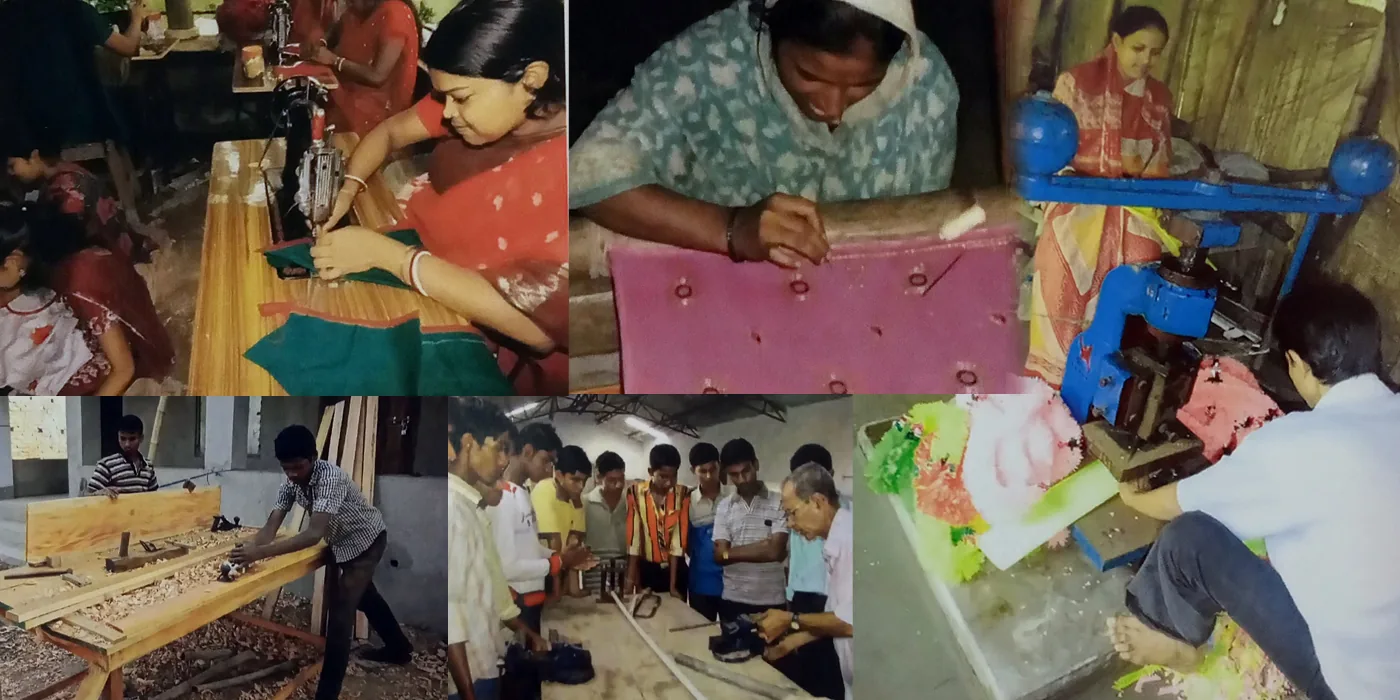
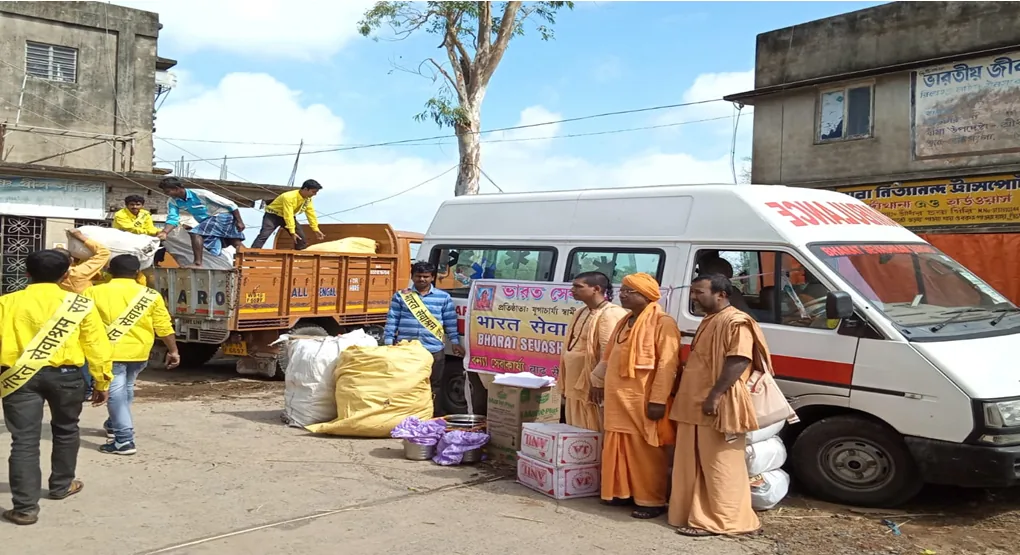
The Sangha’s rural development programmes in the Sundarbans offer concrete examples of its approach. Published programme accounts describe help to self-help groups, horticulture, poultry, fisheries, mat making and other small livelihoods. Such projects recognize that families need sustainable income as well as help during moments of distress.
These activities also include access to primary schools and mobile healthcare for communities separated from larger towns by rivers, long travel distances or limited resources. A programme built around dignity is concerned with what happens after an immediate difficulty has passed.
The enduring ideal is service that strengthens the capacity of individuals and communities to shape their own future. In the Sangha’s reports, particular Sundarbans initiatives include vegetable cultivation, betel-vine production, fishery and self-help group enterprises. These examples make the term self-reliance concrete: access to work, skills and small-scale productive resources can change the choices available to a family.
Connect with BSS Gurugram to learn about volunteer opportunities.